Showing posts with label digital. Show all posts

Sunday, January 15, 2017

An Unprecedented Look at Stuxnet the World’s First Digital Weapon

,

My recent book, The Universal Machine, opens its chapter on hacking with the deployment of the Stuxnet computer virus. Allegedly created by Israel and US intelligence services to target Irans nuclear bomb programme it was the worlds first state against state digital weapon. With North Korea now being accused of hacking Sony perhaps its time to revisit this story. Wired has recently published an excerpt from a new book on Stuxnet - recommended reading.


from The Universal Machine http://universal-machine.blogspot.com/

IFTTT

Put the internet to work for you.

Turn off or edit this Recipe

Read more

Sunday, January 8, 2017

How a Victorian mathematics don became a digital pioneer

,

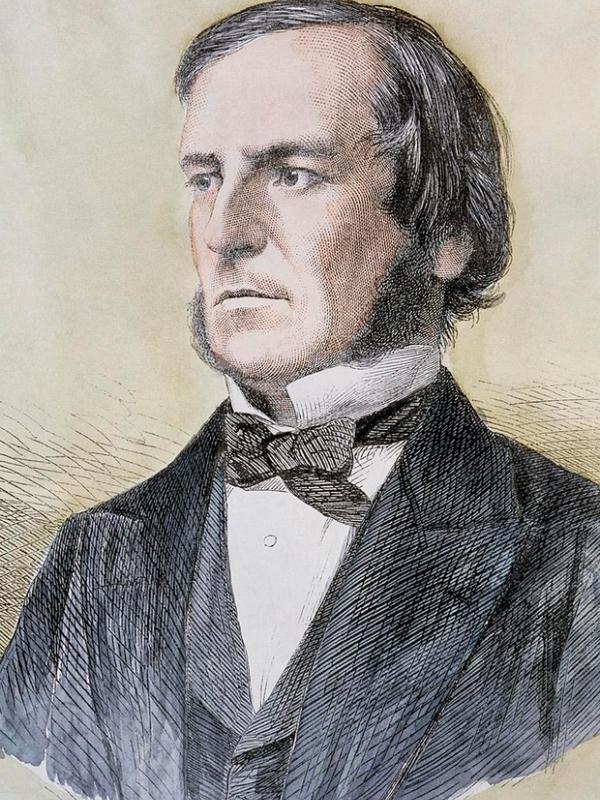
"With a steely glare, a starched collar and a pair of truly prodigious sideburns, he is the digital pioneer you have almost certainly never heard of. Now, 200 years after his birth, George Boole is finally to get the acclaim he deserves." So begins a recent article in The Guardian. Well of course, if youre a computer scientist, you almost certainly have heard of George Boole; he after all was the creator of Boolean logic. However, thats probably all you know so there will be much about him that youre not aware of. As with Charles Babbage, Ada Lovelace, and of course Alan Turing its good to see these formerly obscure digital pioneers getting the public recognition they so deserve. Perhaps as our society becomes more and more dependent on computers were starting to realise that these people are every bit as important as Galileo, Newton, Darwin, Faraday,...

from The Universal Machine http://universal-machine.blogspot.com/

IFTTT

Put the internet to work for you.

Turn off or edit this Recipe

Read more

Friday, November 25, 2016

Learning Digital Skills online with Google Activate

,


According to Eurostat data, over 5 million people under age 25 are currently out of work in Europe, in contrast to an increasing demand for people with digital skills such as Digital Marketing, Big Data, Ecommerce, Mobile App Development and Cloud Computing. In particular, Spanish employers are finding it difficult to find individuals with the right skills, due to the lack of the digital education available.

In an effort to make contributions towards solving Spain’s unemployment in this sector, Google Spain, the Spanish Ministry of Industry through their business school EOI, Universidad Complutense de Madrid and Interactive Advertising Bureau (IAB) are collaborating to build Google Activate, a series of massive open online courses (MOOCs) dedicated to teach digital skills to the young unemployed people in Spain. This is an example of how online education can be scaled to address educational and economic issues.

The inspiration for Google Activate began with the summer 2012 launch of Course Builder, an experimental platform developed on Google technologies designed to provide the capability for anyone to create an online environment that can be used for a wide variety of education-related activities. In September of that same year, Course Builder was made available in Europe, as part of the Google Faculty Summit in London.

Among the early adopters of Course Builder in Europe was a partnership that included the University of Alicante, who in October 2012 launched Unimooc Aemprende, a MOOC for entrepreneurs. This is just one example of the use of Course Builder to build a MOOC designed to solve a broad problem, in this case the acquisition of skills for launching a small business. More than 30,000 people have participated in Unimooc since its launch.

As of today, more than 148,000 people have registered for Activate with 13% of participants earning a certificate, which is obtained after 13 exams certified by either the EOI, Universidad Complutense de Madrid or or the IAB (Interactive Advertising Bureau). Such certificates are being used by the awardees in their LinkedIn profile to position themselves for a job in the digital economy, where many jobs are being created. More than 19,000 students are already certified in one of the 5 digital areas.

Google Activate has plans to increase the number of students with digital skills reaching 160,000 with plans to expand further to other countries in the world.
Read more

Monday, September 19, 2016

Applications open for inaugural West Africa Mobile Awards

,
WAMAS-LOGO-2

Africa Tech Startups can now apply for the first part of the the West Africa Mobile Awards (WAMAS).

WAMAS is meant for leading innovative tech and companies across Africa.

The awards will recognise the global brands, dynamic startups, and visionary individuals who are shaping mobile content and commerce in West Africa.

The awards will comprise 10 categories, with the winners selected by an expert judging panel that includes industry leaders, independent journalists, analysts, academics, and VCs.

The process will be completely comprehensive, exhaustive and systematic. Simply put, the awards and the processes surrounding them will be fully transparent.

Interested companies/individuals should apply for the awards on or before February 28, 2016. it is free to do so! For more information, visit WAMAS website or send an email to af@wamas.com.ng
The winners of the awards will be revealed over cocktails and canapés at the awards ceremony, which is expected to have industry peers, respected judges, sponsors, media, and partners in attendance, on April 21 in Lagos, Nigeria.

WAMAS was created to measure the fundamental impact the provision of mobile connectivity, products, and services is having on almost every aspect of society in West Africa.

The awards is supported by Mobile West Africa (MWA), AppsAfrica.com, and the Mobile Ecosystem Forum (MEF).
Read more

Sunday, September 4, 2016

Stuxnet the first digital weapon

,

Radio New Zealand National had a great interview with Kim Zetter who has written a book about Stuxnet, the worlds first digital weapon. You can listen to the interview here or read about Stuxnet in chapter 12 of my book The Universal Machine. Its certainly true that quietly over the last few years we have crossed into a new age where cyberwar is now a reality.

from The Universal Machine http://universal-machine.blogspot.com/

IFTTT

Put the internet to work for you.

Delete or edit this Recipe

Read more

Thursday, July 28, 2016

An experiment in digital citizenry

,

You may already conduct a lot of your life online, but few countries have totally embraced the concept of online citizenship. the small European country of Estonia has been conducting an interesting experiment making all their population "e-Residents". The Register has just published an interesting article on its reach and impact. This was brought to my attention by my colleague Mark Wilson.

from The Universal Machine http://universal-machine.blogspot.com/

IFTTT

Put the internet to work for you.

Turn off or edit this Recipe

Read more

Thursday, June 23, 2016

Paper to Digital in 200 languages

,


Many of the world’s important sources of information - books, newspapers, magazines, pamphlets, and historical documents - are not digital. Unlike digital documents, these paper-based sources of information are difficult to search through or edit, or worse, completely inaccessible to some people. Part of the solution is scanning, getting a digital image of the page, but raw image pixels aren’t yet recognized as textual content from the computer’s point of view.

Optical Character Recognition (OCR) technology aims to turn pictures of text into computer text that can be indexed, searched, and edited. For some time, Google Drive has provided OCR capabilities. Recently, we expanded this state-of-the-art technology to support all of the world’s major languages - that’s over 200 languages in more than 25 writing systems. This technology is available to users in 2 easy steps:

1. Upload a scanned document in its current form (say, as an image or PDF). The example below shows a scanned document in Hindi uploaded to a user’s Drive account as a PNG.
2. Right-click on the document in the Drive interface, and select ‘Open with’ -> ‘Google Docs’.
This opens a Google document with the original image followed by the extracted text.
You don’t even need to specify which language the document is in; the system will determine that automatically. Or, you can use the Google Drive API for more explicit control over the language detection in documents. For example, here is an invocation of the Drive API in Python:
The OCR capability in Drive is also available in the Drive App for Android.

To make this possible, engineering teams across Google pursued an approach to OCR focused on broad language coverage, with a goal of designing an architecture that could potentially work with all existing languages and writing systems. We do this in part by using Hidden Markov Models (HMMs) to make sense of the input as a whole sequence, rather than first trying to break it apart into pieces. This is similar to how modern speech recognition systems recognize audio input.

OCR and speech recognition share some challenges - like dealing with background “noise,” different languages, and low-quality inputs. But some challenges are specific to OCR: the variety of typefaces, the different types of scanners and cameras, and the need to work on older material that may contain archaic orthographic and linguistic elements. In addition to utilizing HMMs, we leveraged many of the same technologies used in the Google Handwriting Input app to allow automatic learning of features and to give preference to more likely output, as well as minimum-error-rate training to allow effective combination of multiple sources of information, and modern methods in machine learning to minimize manual design and maximize use of data. We also take advantage of advances in internationalization and typesetting, by using synthetic data in our training.

Currently, the OCR works best on cleanly scanned, high-resolution documents in the most commonly used typefaces. We are working to improve performance on poor quality scans and challenging text layouts. Give it a try and let us know how it works for you.
Read more

Sunday, January 31, 2016

A PPT Presentation on Digital Cash e Commerce

,
Hey friends!!!
Again back with another ppt on Digital Cash submitted by Jamsheer Kutty of KC College, Mumbai.
Nice topic and Nice content. Download and enjoy!!!


Few Points which are covered in this PPT are as fallows:
  • What is E-commerce ?
  • What is Digital Cash ?
  • Relation between e commerce and digital cash
  • Key Properties of Digital Cash
  • Digital cash VS Credit Card
  • The Online Model
  • Pros And Cons of the online model
  • The Offline Model
  • Pros And Cons of the offline model
  • Traceable Signature Protocol and it’s problem
  • A typical coin
  • How can we catch the user
  • Reusability
  • Advantages
  • Global disadvantages
  • Legal Issues with Digital cash

Submitted by : Jamsheer Kutty
College : KC College, Mumbai

Team Members :
  • Jamsheer kutty
  • Satyam Dwivedi
  • Gaurav Sharma
  • Ganesh Balraj

Download the presentation file below:
  • digital_cash_ecommerce_ppt.zip
Read more
 

Computer Info Copyright © 2016 -- Powered by Blogger